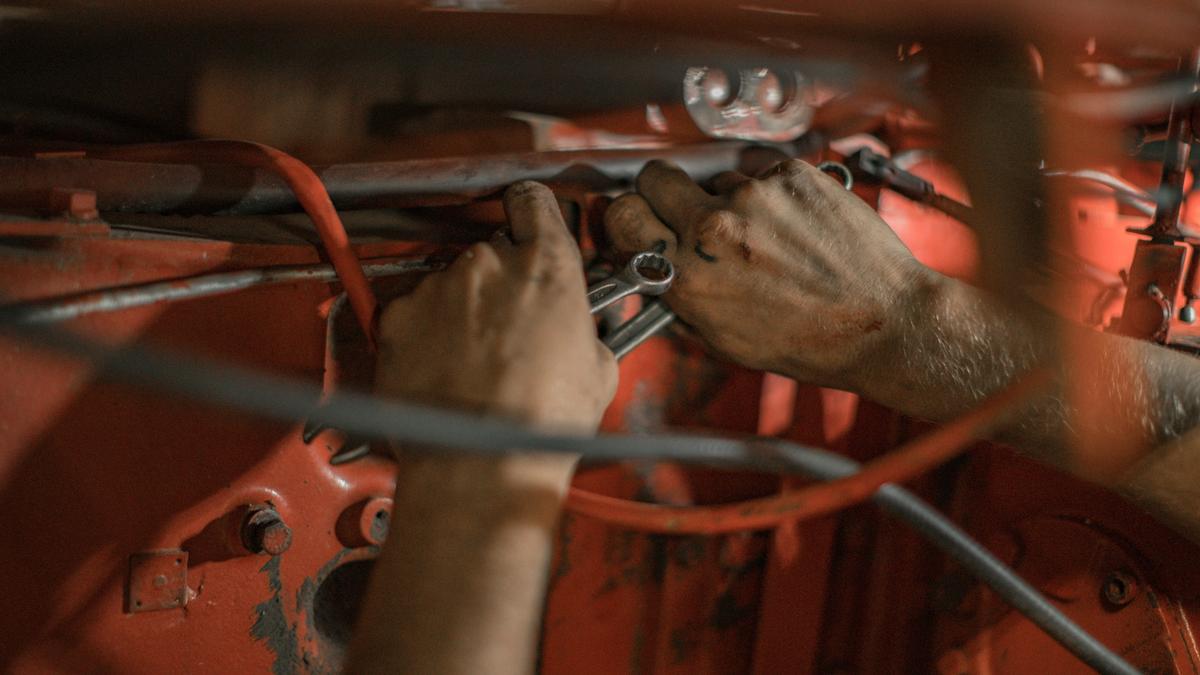
A marten in the engine bay isn't looking for food: it's looking for somewhere warm and sheltered. The biting happens mainly when another animal's scent is already there. The damaged part is often worth very little, the consequences far less so — and before you authorise the repair, it's worth checking your insurance cover.
Why martens get into the engine bay
A recently switched-off engine stays warm for hours, and the bay is an enclosed, dry space that's easy to reach from underneath. For a nocturnal animal it is simply good shelter. So far, no damage.
The biting has a different origin. If another marten has been there before, it leaves scent traces on cables, hoses and insulation. The animal that arrives next reads them as a stranger's presence in its own territory and bites exactly where the scent is. That's why some cars are hit repeatedly and others, parked right beside them, never are.
What gets damaged and how you notice
Typical targets are ignition leads and electrical wiring, coolant hoses, vacuum hoses (small rubber lines that control certain engine functions), protective sleeving, sound insulation and various rubber components.
The consequences depend on what was bitten: a warning light, an engine running roughly or misfiring, a puddle under the car, rising temperature, an electrical fault, or a car that simply won't start. Carrying on driving in that state is the quickest way to turn small damage into big damage.
What to do, in the right order
- If you have a warning light, a fluid leak, rising temperature or an engine running badly, avoid driving on unnecessarily.
- Have the engine bay inspected. Not everything is visible from above: often the engine cover or underbody shield has to come off to find the bite.
- Before approving the repair, check with your insurer whether the damage is covered.
- Ask explicitly whether both the direct damage (the bitten cable or hose) and any consequential damage are covered — an overheated engine, for instance. Terms vary from policy to policy: don't assume both are included.
« Good to know: cover for marten damage depends on the contract and the insurer. Check your policy or ask your company directly before giving the go-ahead — a phone call beforehand is worth far more than a discussion afterwards. »
Three observations from the workshop
- The bitten part is cheap, what follows isn't. A vacuum hose worth a few francs can make an engine run badly for weeks; a severed coolant hose can lead to overheating with far more serious consequences. The final bill almost always depends on how far the car was driven afterwards.
- Repairing without cleaning only solves half of it. If the car is frequently exposed, replacing only the damaged part leaves the scent in the engine bay. Cleaning the traces and suitable protective measures reduce the risk of a second visit.
- The damage isn't always visible from above. Much of the wiring runs under the cover or along the bottom of the engine bay. A quick look with the bonnet open can show nothing even when something has been bitten.
The practical step
If you suspect marten damage, get a diagnosis before deciding anything: knowing exactly what was bitten matters both for the repair and for the insurance claim. And if the car has been hit once already, treat cleaning the engine bay as part of the job, not as an extra.