At the vehicle inspection (MFK), the road traffic office checks whether your car is roadworthy and meets the technical requirements: brakes, tyres, lights, suspension, underbody and emissions. For passenger cars the first inspection falls five years after first registration, the next after three years, then every two years. Checking a few things yourself beforehand, or having the car prepared, often saves you the follow-up inspection.
What is the MFK?
MFK stands for Motorfahrzeugkontrolle, the official periodic vehicle inspection set out in Art. 33 of the VTS ordinance. It checks whether your car is safe and compliant, not whether it has been well looked after. That is the key difference from a service.
« A service follows the manufacturer's maintenance schedule. The inspection checks that the car meets safety and legal requirements. »
So a freshly serviced car does not automatically pass. An oil change says nothing about braking performance, play in the suspension or a broken tail light.
How often does a car need an inspection?
- The notice comes by post from your cantonal road traffic office — normally you do not have to register yourself.
- Other vehicle categories (motorhomes, trailers, commercial vehicles) have their own intervals. This is about an ordinary private passenger car.
- Depending on how busy the office is, the notice can arrive later than expected. After technical modifications to the car, though, it is up to you to report them.
What gets checked at the inspection?
The exact inspection depends on the vehicle, but these are the areas usually examined.
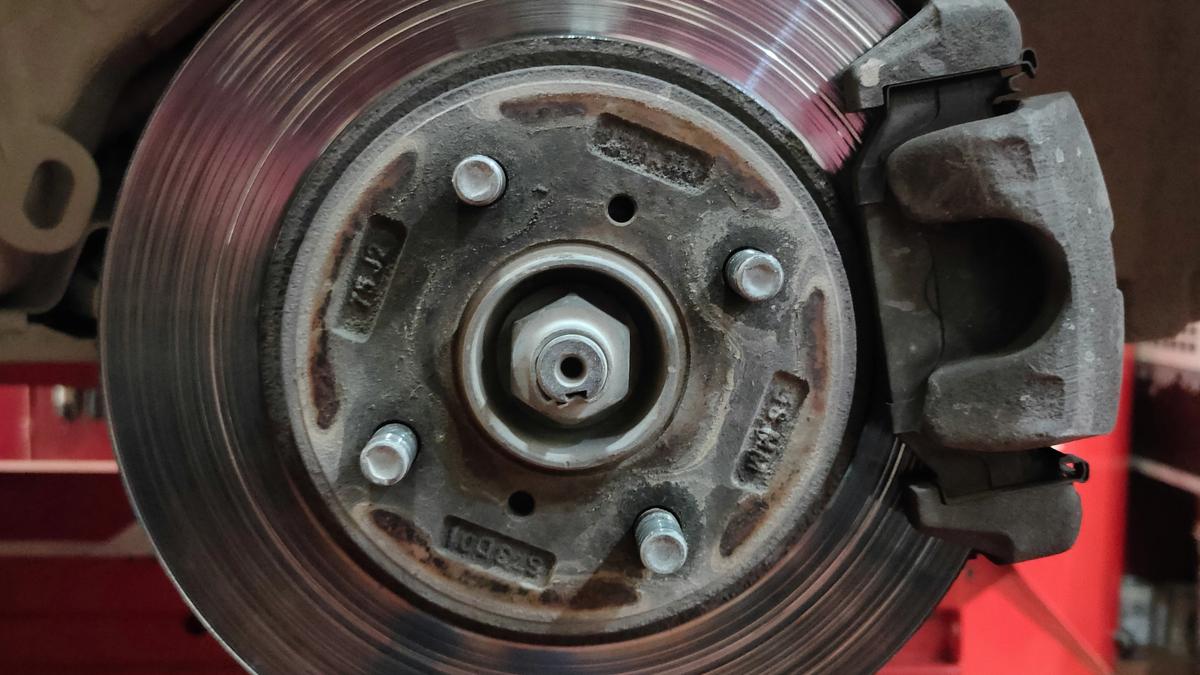
Brakes. Braking performance, differences between left and right, the handbrake, and the visible condition of discs, pads and lines. A side-to-side difference often goes unnoticed in daily driving — on the test bench it shows up immediately.
Tyres and wheels. Tread depth, damage, condition, permitted tyre and rim combination, and noticeably uneven wear.
Lights and visibility. Headlights including their alignment, indicators, brake lights, tail lights, windscreen, wiper blades and mirrors.
Steering and suspension. Track rods, joints, shock absorbers and wheel bearings are checked for excessive play and wear. “Play” simply means a part moves more than it should, because it is worn.
Underbody and structure. Corrosion, damage, exhaust, leaks and how components are secured.
Safety equipment. Seatbelts, warning lights, horn, doors and locking mechanisms.
Emissions and related systems. Relevant depending on the vehicle. On modern cars the warning lights on the display count too — an engine light that stays on is rarely a good sign.
Which defects come up most often?
Not every one of these leads automatically to a fail. What counts is how severe it is and where it is — a patch of rust on a heat shield is not the same as rust on a load-bearing part.
Can I prepare the car myself?
Yes, and it is worth it. You can check these in ten minutes without tools:
- All exterior lights (easier with two people)
- Tyres: tread and visible damage
- Windscreen and wiper blades
- Washer fluid topped up
- Warning lights on the display
- Horn
- Seatbelts: condition and retraction
- Number plates legible and properly fixed
- Obvious stains under the car
These, on the other hand, belong in the garage: brake condition, play in suspension and steering, underbody inspection, technical leaks and emissions-related faults. Those need a lift, a test bench and a diagnostic tool.
When is a pre-inspection check at a garage worth it?
A professional preparation makes most sense on older cars, when the vehicle has not been properly checked for a while, when warning lights or unfamiliar noises appear, or simply when you are not sure about tyres, brakes and suspension.
Mechanic's tip 1: Before an inspection, most customers think about the big repairs. In practice it is often small things — a blown bulb, a cracked wiper blade, a damaged tyre — that cause unnecessary hassle.
Mechanic's tip 2: A car can drive perfectly normally and still have noticeable play in the steering or suspension. Wear creeps in gradually and you get used to it without noticing.
Mechanic's tip 3: Uneven tyre wear tells you more than “the tyres are old”. If one edge is worn more, it often points to axle geometry or suspension rather than the tyres themselves.
Mechanic's tip 4: Washing the car does not make it any better technically. But a clean engine bay and underbody are what make leaks and condition assessable at all — including for you, if you want to know where something is dripping.
« The aim is not to replace everything as a precaution. A good garage tells you clearly what is needed now, what might become relevant for the inspection, and what is normal wear that can still wait. »
What happens if there is a defect?
Defects found are recorded in the inspection report. Depending on severity they have to be fixed and confirmed before the inspection is complete. In many cantons this runs through the repair confirmation procedure: an authorised garage confirms the repair directly, so a second appointment at the office is not needed.
The deadline is on your inspection report — it varies by canton and is usually between two weeks and a month. For serious, safety-relevant defects the rules can be stricter. What your road traffic office has recorded is always what counts.
In short
The inspection is not maintenance, it is a safety check — which is why even a recent service does not automatically protect you. Lights, tyres and glass you can check yourself; brakes, suspension and underbody belong on a lift.